

The “40% Failure” Warning By 2026, the novelty of autonomous agents has worn off, replaced by the cold reality of enterprise accountability. According to Gartner, approximately 40% of AI agent projects face cancellation or indefinite “pausing” before they ever reach full-scale…

Multi-Agent AI in 2026: Collaborative Teams for Business Efficiency
The Rise of the Digital Workforce By 2026, the concept of a “single AI” has become obsolete for the modern enterprise. To handle the complexity of global markets and cross-channel customer journeys, organizations are deploying collaborative AI agents—specialized squads of intelligence…
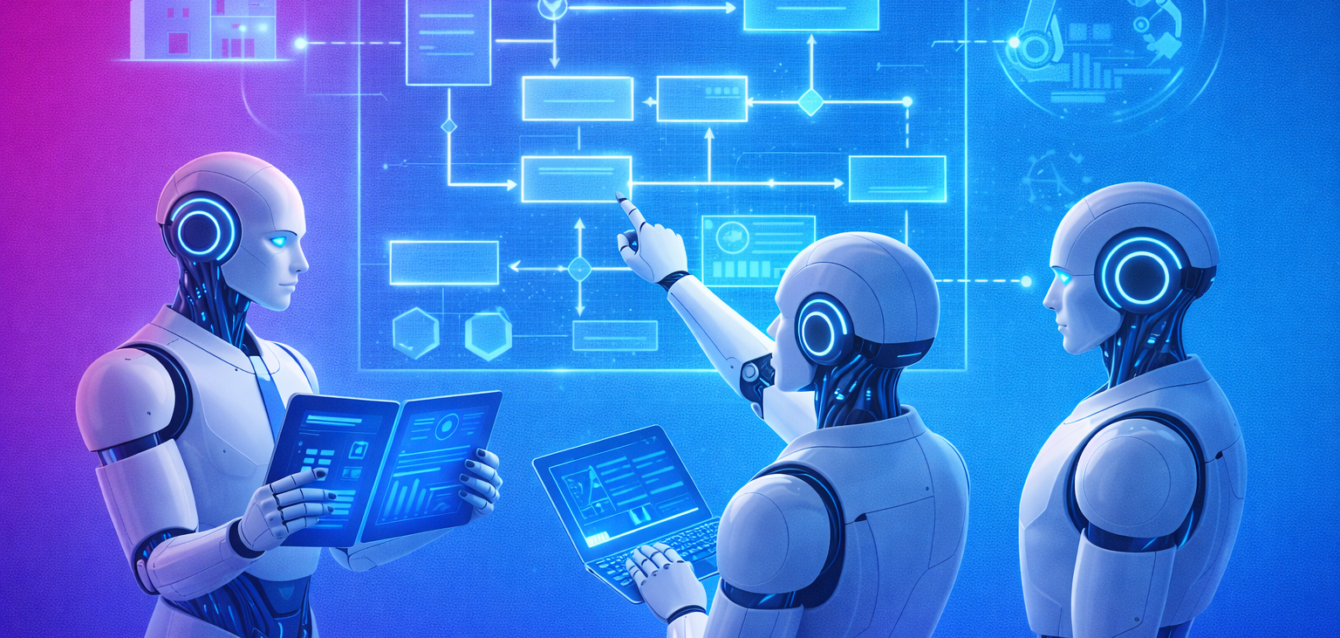
Agentic AI 2026: From Pilots to Production Workflows
The Maturity of Autonomy As we move through 2026, the honeymoon phase of AI experimentation has concluded. Organizations are no longer satisfied with isolated prototypes or simple Q&A bots. The current mandate is clear: transition agentic AI production 2026 standards from…
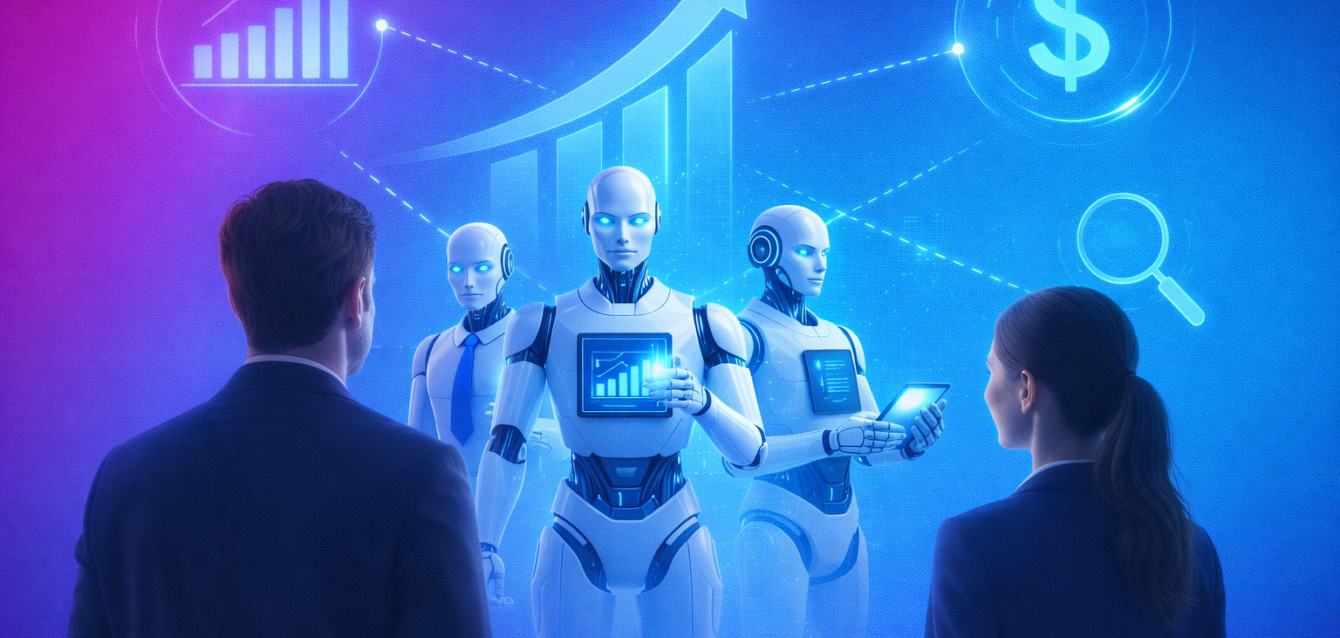
Navigating AI Agents in 2026: Strategies for Successful Adoption and ROI
Over the past two years, the business landscape has undergone a radical transformation. If 2024 was the year of Chatbot experiments and 2025 was the year of workflow integration, 2026 is undoubtedly the year of Agentic AI. We are no longer…

Implementing Physical AI for Customer-Facing Roles: Best Practices
The New Frontier of Human-AI Interaction Artificial intelligence has transcended the screen. In 2026, Physical AI—AI agents embedded in smart kiosks, interactive in-store displays, and service robots—is redefining the face-to-face experience. For businesses, Physical AI implementation is not just a technological…

Tools and Frameworks for Developing Multi-Agent Systems
The Engine Behind Collaborative AI The real power of Agentic AI is unlocked through collaboration. Multi-agent systems (MAS) are architectures where individual, specialized AI agents work together to solve problems far beyond the capacity of a single monolithic system. As enterprises…

Implement Agentic AI: Autonomous AI Agents Guide for Step-by-Step Implementation
Beyond Automation to Autonomy The shift from simple automation to autonomous decision-making marks the true arrival of enterprise-grade Artificial Intelligence. Agentic AI systems are the cornerstone of this evolution, capable of not just executing instructions, but planning, reasoning, and adapting to…

Governance-First Approaches for Self-Evolving AI Agents
Balancing Autonomy with Accountability The next generation of autonomous systems is characterized by self-evolving AI agents—systems that learn, adapt, and refine their own code or strategy in real-time. This dynamic capability unlocks unprecedented efficiency but introduces critical challenges related to control…

Overcoming Adoption Barriers for Agentic AI in Enterprises
The promise of Agentic AI—autonomous systems capable of complex problem-solving—is undeniable. By 2026, these agents will be the backbone of efficient, data-driven enterprises. However, the path from pilot project to full-scale deployment is fraught with challenges. For enterprise leaders, the successful…

Preparing for AI Agents in 2026: A Comprehensive Business Roadmap
The Autonomous Tipping Point The year 2025 marked the foundational phase of AI integration. Companies experimented with chatbots, automated reporting, and basic machine learning models. But 2026 is different. It’s the year of the agentic revolution, where AI systems cease being…